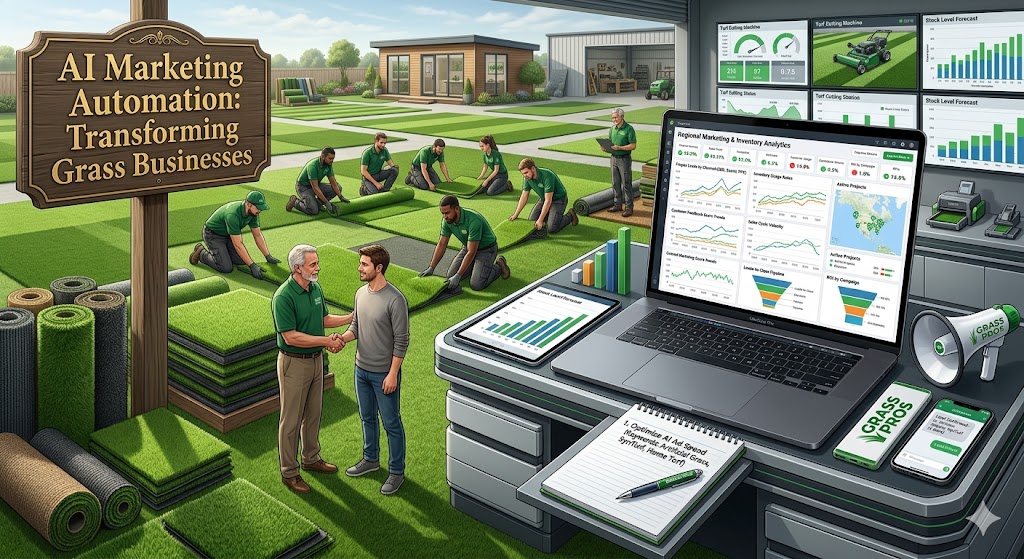
As the artificial grass industry evolves, AI marketing automation is emerging as a transformative capability for businesses seeking to improve marketing performance. The technology applies data analytics and machine learning to optimize campaigns, streamline operations, and strengthen customer engagement. In 2026, artificial grass firms should expect substantive changes in how they attract and retain customers, driven by AI-enabled solutions. This article examines the benefits of AI marketing automation, its effects on lead generation and customer segmentation, and strategies to support growth in the artificial turf market.
Integrating AI into marketing both mitigates challenges faced by turf installation companies and improves operational efficiency. By understanding the mechanisms behind AI marketing automation, businesses can harness its capabilities to improve marketing outcomes. This article addresses how AI enhances lead generation, refines customer segmentation, and supports effective digital marketing techniques for turf installers.
What Is AI Marketing Automation and How Does It Benefit Turf Installation Companies?
AI marketing automation refers to the application of artificial intelligence technologies to automate marketing tasks and processes, including lead generation, customer engagement, and campaign optimization. For turf installation companies, the benefits are significant: streamlined marketing operations, reduced manual workload, and greater focus on strategic growth initiatives.
Automating repetitive tasks conserves time and resources, allowing teams to concentrate on higher-value activities. AI tools also analyze customer data to produce insights that enable tailored marketing strategies for specific audience segments. This level of personalization improves customer engagement and increases the probability of conversion.
This approach aligns with a strategic framework that categorizes AI benefits as mechanical, thinking, and feeling AI, and guides marketing research, strategy, and action.
Strategic AI Marketing Framework: Automation, Data & Emotions
The authors develop a three-stage framework for strategic marketing planning, incorporating multiple artificial intelligence (AI) benefits: mechanical AI for automating repetitive marketing functions and activities, thinking AI for processing data to arrive at decisions, and feeling AI for analyzing interactions and human emotions. This framework lays out how AI can be used for marketing research, strategy (segmentation, targeting, and positioning, STP), and actions. At the marketing research stage, mechanical AI can be used for data collection, thinking AI for market analysis, and feeling AI for customer understanding. At the marketing strategy (STP) stage, mechanical AI can be used for segmentation (segment recognition), thinking AI for targeting (segment recommendation), and feeling AI for positioning (segment resonance). At the marketing action stage, mechanical AI can be used for standardization, thinking AI for personalization, and feeling AI for relationalization. We apply this framework across various areas of marketing, organized by marketing around the 4Ps/4Cs, to illustrate the strategic use of AI.
A strategic framework for artificial intelligence in marketing, MH Huang, 2021
How Does AI Improve Lead Generation for Artificial Grass Businesses?
AI improves lead generation for artificial grass businesses through predictive analytics and machine learning models. These technologies analyze large datasets to identify prospective leads and estimate the likelihood of conversion likelihood. Automating engagement processes enables outreach at optimal times with targeted messages, improving conversion rates.
Predictive Scoring
Predictive scoring evaluates leads according to behavior and engagement. By analyzing prior interactions, AI assigns scores that allow businesses to prioritize outreach. This ensures sales teams focus on the most promising opportunities, optimizing time and resources.
Machine Learning Models
Machine learning models continually learn from new data, enabling businesses to refine lead-generation strategies. As models adapt, they become more effective at identifying high-quality leads, which can increase sales and revenue for artificial grass companies.
Automated Engagement
AI-powered automated engagement tools deliver personalized messages to leads based on preferences and behaviors. This targeted communication improves the customer experience and increases the likelihood of conversion by providing relevant, tailored information.
In What Ways Does AI Enhance Customer Segmentation and Personalization?
AI improves customer segmentation and personalization by analyzing customer data to identify distinct audience segments. This capability enables businesses to tailor marketing strategies to each segment’s specific needs, producing more effective campaigns.
Research indicates that AI-driven marketing models enable organizations to transition to data-centric, adaptive, and predictive decision systems that deliver personalized experiences at scale.
AI Transforms Marketing: Customer Experience & Segmentation
This study, titled AI-Driven Insights for Product Marketing: Enhancing Customer Experience and Refining Market Segmentation, explored the transformative influence of artificial intelligence (AI) on modern marketing practices through a systematic synthesis of 72 peer-reviewed papers published between 2013 and 2023. Guided by the Preferred Reporting Items for Systematic Reviews and Meta-Analyses (PRISMA) framework, the study examined how AI technologies, including machine learning, natural language processing, neural networks, and predictive analytics, reshaped data interpretation, customer engagement, and segmentation precision. The findings revealed that AI-driven marketing models enabled organizations to transition from intuition-based strategies to data-centric, adaptive, and predictive decision systems capable of delivering personalized experiences at scale. Across the reviewed literature, AI was found to enhance customer experience (CX) by integrating emotional intelligence
Artificial Intelligence in Product Marketing: Transforming Customer Experience and Market Segmentation, A Hye, 2023
Data Analysis for Segmentation
AI tools process large datasets to reveal patterns and trends not immediately evident. By segmenting customers according to demographics, behavior, and preferences, businesses can design targeted campaigns that resonate with each group.
Personalized Marketing Strategies
Using AI, turf installation companies can develop personalized strategies addressing the unique needs of distinct customer segments. Examples include customized email campaigns, targeted advertisements, and tailored content aligned with each segment’s interests.
Examples of AI-Driven Personalization
AI-driven personalization includes recommending products from past purchases and sending offers based on browsing history. These strategies enhance customer satisfaction and foster loyalty and repeat business.
Which AI-Powered Marketing Strategies Drive Artificial Turf Business Growth in 2026?
In 2026, specific AI-powered strategies are expected to drive growth for artificial turf businesses. These approaches leverage AI to enhance marketing effectiveness and customer engagement.
- Smarter Marketing: AI enables businesses to analyze customer data and market trends, allowing for more informed decision-making and strategic planning.
- Enhanced Personalization: By utilizing AI tools, companies can create highly personalized marketing campaigns that resonate with their target audience, leading to increased engagement and conversion rates.
- Automation of Repetitive Tasks: Automating routine marketing tasks frees up valuable time for marketing teams, allowing them to focus on creative and strategic initiatives that drive growth.
Collectively, these strategies improve marketing efficiency and the customer experience, positioning artificial grass businesses for competitive success.
What Are Effective Digital Marketing Techniques for Turf Installers Using AI?
Artificial grass businesses may employ several AI-enhanced digital marketing techniques to improve outreach and engagement. These techniques include:
- Lead Generation Techniques: Utilizing AI tools to identify and engage potential customers through targeted advertising and personalized content.
- Automated Customer Engagement: Implementing chatbots and automated email campaigns to maintain communication with leads and customers, ensuring timely responses and support.
- Reputation Management: Leveraging AI to monitor online reviews and social media mentions, allowing businesses to respond promptly and manage their online reputation effectively.
Integrating these techniques helps turf installers increase visibility and attract additional customers.
How Can AI Customer Targeting Increase Sales Conversion Rates?
AI customer targeting increases conversion rates by enabling businesses to deliver personalized messages to the right audience at the optimal time. This targeted approach makes marketing efforts more relevant and effective.
Multiple studies confirm that AI technologies improve audience segmentation and personalization, which leads to higher conversion rates and improved return on investment.
AI in Digital Marketing: Personalization, Efficiency & ROI
The modern use of artificial intelligence in digital marketing is highly relevant, as AI technology is rapidly evolving and enables businesses to adapt to new market conditions. The study aimed to identify the main advantages and changes that AI technologies bring to the marketing strategies of small and medium-sized businesses. The study used analysis and comparison methods to examine the impact of AI on key marketing processes, including targeting, personalisation, and customer service. It was found that AI enables better audience segmentation and greater personalisation of offers, leading to higher conversion rates and a higher return on investment. Automation of routine processes, such as administrative tasks and customer support, helps to reduce the time spent on these operations and increases overall business efficiency.
AUTOMATION IN DIGITAL MARKETING: HOW AI TECHNOLOGIES HAVE CHANGED MARKETING STRATEGIES, YD Gorodetskiy, 2025
Lead Qualification
AI tools analyze customer data to qualify leads by conversion likelihood. Prioritizing high-quality leads improves conversion rates and maximizes marketing ROI.
Automated Follow-Ups
Automated follow-up messages triggered by customer interactions ensure timely communication. This proactive process maintains engagement and increases the probability of conversion.
Targeted Marketing Strategies
AI enables the development of targeted strategies that resonate with defined customer segments. Tailored messaging that addresses each group’s needs enhances marketing effectiveness and drives higher conversions.
How Does the AGM Platform Support AI Marketing Automation for Turf Companies?
The AGM platform offers features designed to support AI-driven marketing automation for turf companies. These tools help streamline marketing operations and improve customer engagement.
AI Chat and Voice Assistants
AGM’s platform includes AI chat and voice assistants that interact with customers in real time to provide support and information. This capability enhances the customer experience and ensures prompt handling of inquiries.
Lead Tracking and Nurturing
The platform offers tools to track leads across the sales funnel, enabling businesses to nurture relationships and guide prospects toward conversion. This tracking reduces the risk of potential customers being overlooked.
Sales and Installation Pipelines
AGM’s platform includes features for managing sales and installation pipelines, streamlining operations, and improving efficiency. Integrating marketing and operational tools strengthens overall business performance.
What Are the Key Features of AGM’s AI Marketing Automation System?
AGM’s AI marketing automation system includes key features that enhance utility for turf companies:
- AI Chat and Voice Assistants: These tools provide real-time customer support and engagement, improving the overall customer experience.
- Integrated Contract Builders: This feature simplifies contract creation, enabling businesses to streamline operations and reduce administrative burdens.
- SmartFlows for Automation: SmartFlows enable businesses to automate various marketing tasks, ensuring campaigns run smoothly and efficiently.
These features position AGM’s platform as a practical resource for artificial grass businesses seeking to leverage AI marketing automation.
Can Case Studies Demonstrate Measurable ROI from Using AGM?
Case studies provide insights into the measurable ROI achievable with AGM’s platform. They typically demonstrate improvements in key performance indicators and the effectiveness of AI marketing automation.
Showcasing Improvements in KPIs
Analyzing case studies shows how turf companies implemented AGM’s platform and the resulting improvements in marketing performance. This data-driven approach demonstrates the tangible benefits of AI marketing automation.
Before-and-After Comparisons
Before-and-after comparisons in case studies can illustrate AGM’s impact on sales, lead generation, and customer engagement. These comparisons provide evidence of the effectiveness of AI marketing strategies.
Customer Testimonials
Customer testimonials in case studies further validate AGM’s platform performance. Statements from satisfied users help potential customers assess the value of investing in AI marketing automation.
What Future Trends Will Shape AI Marketing in the Artificial Grass Industry?
As the artificial grass industry evolves, several trends are expected to shape AI marketing strategies. These developments will influence how businesses design marketing efforts and engage customers.
- Advancements in NLP: Natural language processing (NLP) technologies will enhance customer interactions, enabling more sophisticated chatbots and voice assistants.
- Hyper-Personalization: The demand for hyper-personalized marketing experiences will grow, prompting businesses to leverage AI to gain deeper customer insights and deliver tailored messaging.
- Data Privacy Regulations: As data privacy concerns rise, businesses will need to adapt their marketing strategies to comply with regulations while still effectively engaging customers.
These trends will play a crucial role in shaping the future of AI marketing within the artificial grass industry.
Which 2026 AI Growth Strategies Are Most Relevant for Turf Businesses?
In 2026, certain AI growth strategies will be especially relevant for turf businesses seeking to improve marketing performance. They focus on leveraging AI to drive growth and enhance customer engagement.
- Smarter Marketing Powered by AI: Using AI to analyze market trends and customer behavior will enable businesses to make informed marketing decisions.
- Enhanced Personalization: AI-driven personalization will enable companies to create targeted marketing campaigns that resonate with their audience, leading to increased engagement.
- Automation of Repetitive Tasks: Automating routine marketing tasks will free up resources, allowing businesses to focus on strategic initiatives that drive growth.
Implementing these strategies allows turf businesses to position themselves for success in a competitive market.
How Will Marketing Automation Platforms Evolve to Support Turf Installers?
Marketing automation platforms are expected to evolve to better support turf installers. These advancements will expand AI marketing automation capabilities and improve overall effectiveness.
Enhanced AI Capabilities
Future platforms will incorporate more advanced AI capabilities, enabling deeper insights and more effective targeting strategies. This evolution will help businesses optimize marketing efforts.
Deeper Personalization
With rising customer expectations, platforms will need to offer deeper personalization. Leveraging AI will allow the creation of highly tailored marketing experiences that resonate with individual customers.
Improved Local Search Performance
Given the importance of local search, platforms will evolve to help turf installers optimize online presence for local customers. This will include features that enhance local SEO and improve search visibility.
How Can Artificial Grass Companies Implement and Monitor AI Marketing Effectively?
Effective implementation and monitoring of AI marketing requires a strategic approach. Artificial grass companies should apply best practices to ensure the successful integration of AI marketing automation.
Automate Processes
Automating marketing processes streamlines operations and improves efficiency. This includes automating lead generation, customer engagement, and campaign management.
Leverage Predictive Analytics
Leveraging predictive analytics helps businesses identify trends and make data-driven decisions. This approach enables companies to anticipate market changes and adapt marketing strategies.
Monitor KPIs
Regular monitoring of key performance indicators is essential to evaluate AI marketing effectiveness. Tracking metrics such as lead conversion rates and customer engagement enables informed adjustments to strategy.
What Are The Best Practices for Technical Implementation and Structured Data Use?
To maximize the benefits of AI marketing automation, artificial grass companies should follow best practices for technical implementation and structured data use.
Data Privacy and Governance
Ensuring data privacy and governance is crucial when implementing AI marketing. Businesses must comply with applicable regulations and prioritize customer data protection to build trust and credibility.
Structured Data Implementation
Implementing structured data enhances search visibility and improves marketing campaign effectiveness. This involves applying schema markup to provide search engines with clear product and service information.
Content Quality and Relevance
Maintaining high content quality and relevance is essential for successful AI marketing. Businesses should produce valuable content that resonates with target audiences and aligns with marketing objectives.
Which KPIs and Tools Should Turf Businesses Use to Track AI Marketing Success?
Tracking AI marketing success requires specific key performance indicators and tools. Artificial grass businesses should monitor the following metrics:
- Lead Volume from Each Source: Understanding where leads comes from helps businesses allocate resources effectively and optimize their marketing strategies.
- Lead-to-Booked-Job Conversion Rate: This metric measures the effectiveness of the sales process and helps identify areas for improvement.
- Overall Campaign ROI: Calculating the return on investment for marketing campaigns allows businesses to assess their effectiveness and make data-driven decisions for future initiatives.
By focusing on these KPIs and using appropriate tools, turf businesses can effectively track their AI marketing success and drive growth.
Frequently Asked Questions
What are the challenges of implementing AI marketing automation in artificial grass businesses?
Implementing AI marketing automation presents challenges for artificial grass businesses, including upfront technology costs, the need for staff training, and employee resistance to change. Compliance with data privacy regulations can further complicate integration. Overcoming these issues requires a strategic plan that communicates benefits clearly and provides ongoing staff support.
How can small artificial grass companies benefit from AI marketing automation?
Small artificial grass companies benefit from AI marketing automation through streamlined marketing and optimized use of limited resources. AI can automate repetitive tasks—such as email campaigns and social media scheduling—freeing staff to focus on strategic work. AI also provides insights into customer behavior and preferences, enabling targeted campaigns that increase engagement and conversions, supporting growth on smaller budgets.
What role does data privacy play in AI marketing automation for turf companies?
Data privacy is a critical consideration for turf companies using AI marketing automation. When collecting and analyzing customer data, businesses must comply with regulations such as GDPR and CCPA. Robust data governance—secure storage, transparent usage policies, and explicit consent—builds customer trust and mitigates legal risk. Prioritizing data privacy also enhances corporate reputation.
How can artificial grass businesses measure the effectiveness of their AI marketing strategies?
Measure AI marketing effectiveness by tracking KPIs such as lead conversion rates, engagement levels, and campaign ROI. Analytics tools provide quantitative insights into customer behavior and campaign performance, enabling data-driven adjustments. Regular metric reviews identify effective tactics and areas for improvement. Customer surveys offer qualitative feedback to inform strategy further.
What future technologies might impact AI marketing in the artificial grass industry?
Technologies likely to impact AI marketing include advanced machine learning algorithms, natural language processing (NLP), and augmented reality (AR). Improved machine learning yields more accurate customer insights and predictive analytics; NLP enhances customer interactions via more capable chatbots; AR enables immersive visualization of installations. These technologies will drive innovation in marketing strategies and enhance customer engagement.
How can turf companies ensure the successful integration of AI marketing tools?
Ensure the successful integration of AI marketing tools by developing a clear strategy with defined goals. Select tools that align with operational needs and provide staff with adequate training. Establish feedback loops to monitor tool performance and implement adjustments. Regularly review data and outcomes to identify areas for improvement and sustain business growth.
Conclusion
AI marketing automation is reshaping the artificial grass industry by improving lead generation, customer segmentation, and personalization. By leveraging advanced technologies, businesses can streamline operations and strengthen customer engagement, driving measurable growth. Adopting these solutions positions turf companies to succeed in a competitive market. Learn how our AI marketing tools can elevate your business today.